
Your mood is not random, and it is definitely not just a willpower problem. It is chemistry. Protein and carbs provide the raw materials your brain uses to make neurotransmitters like serotonin, dopamine, and melatonin, which influence mood, sleep, focus, and motivation. Tryptophan from protein can either support calm and sleep through serotonin and melatonin, or get diverted to energy production as niacin, especially when stress and inflammation are high. Carbs act as the delivery system that helps tryptophan get into the brain, while micronutrients like B vitamins, magnesium, iron, zinc, copper, and vitamin C act as cofactors that keep those pathways moving. When thyroid, gut health, blood sugar, and neurotransmitters are not supported, you end up with irritability, anxiety, low motivation, and burnout.
The BRAIN Method from Chews Food Wisely focuses on blood sugar balance, lowering inflammation, adrenal resilience, gut support, and nutrient repletion so you can nourish your neurochemistry and actually feel like yourself again.
You know those days where you’re doing everything “right” — eating clean, exercising, sleeping when you can — and yet you still feel off? You’re snapping at your partner for breathing too loud, crying over a car commercial, and staring at your to-do list like it’s written in another language.
You might think this is just “getting older” or “stress.” But often, it’s not about your willpower at all. It’s about your biochemistry.
Your mood is deeply connected to your nutrition — specifically, to the nutrients that help your body make neurotransmitters like serotonin, dopamine, and melatonin. When you’re not getting enough of the raw materials your brain needs to make these feel-good messengers, your mood will tell you long before your labs do.
At Chews Food Wisely, we’ve spent over a decade helping women connect the dots between what’s on their plate and how they feel. Today, we’re diving into one of the most overlooked connections in functional nutrition: how protein and micronutrients directly influence your mood, energy, and emotional resilience.
Let’s unpack what’s really happening inside your body when you eat (or don’t eat) the nutrients your brain depends on.
Protein isn’t just for gym bros or muscle recovery. It’s for mood stability, mental clarity, and sleep.
When you eat protein, your body breaks it down into amino acids, which are the raw materials your brain uses to make neurotransmitters — the chemicals that shape how you feel and function.
One amino acid, tryptophan, deserves a standing ovation here.
Tryptophan is essential, which means your body cannot make it. You must get it through food — things like eggs, salmon, turkey, tofu, chicken, and Greek yogurt.
Once inside your body, tryptophan can go one of two major directions:
Your body decides which path to prioritize based on your stress levels, inflammation, and nutrient availability. When your body is constantly under stress, it diverts tryptophan toward energy production (niacin) instead of serotonin, which can leave you feeling wired but moody, anxious, or tired.
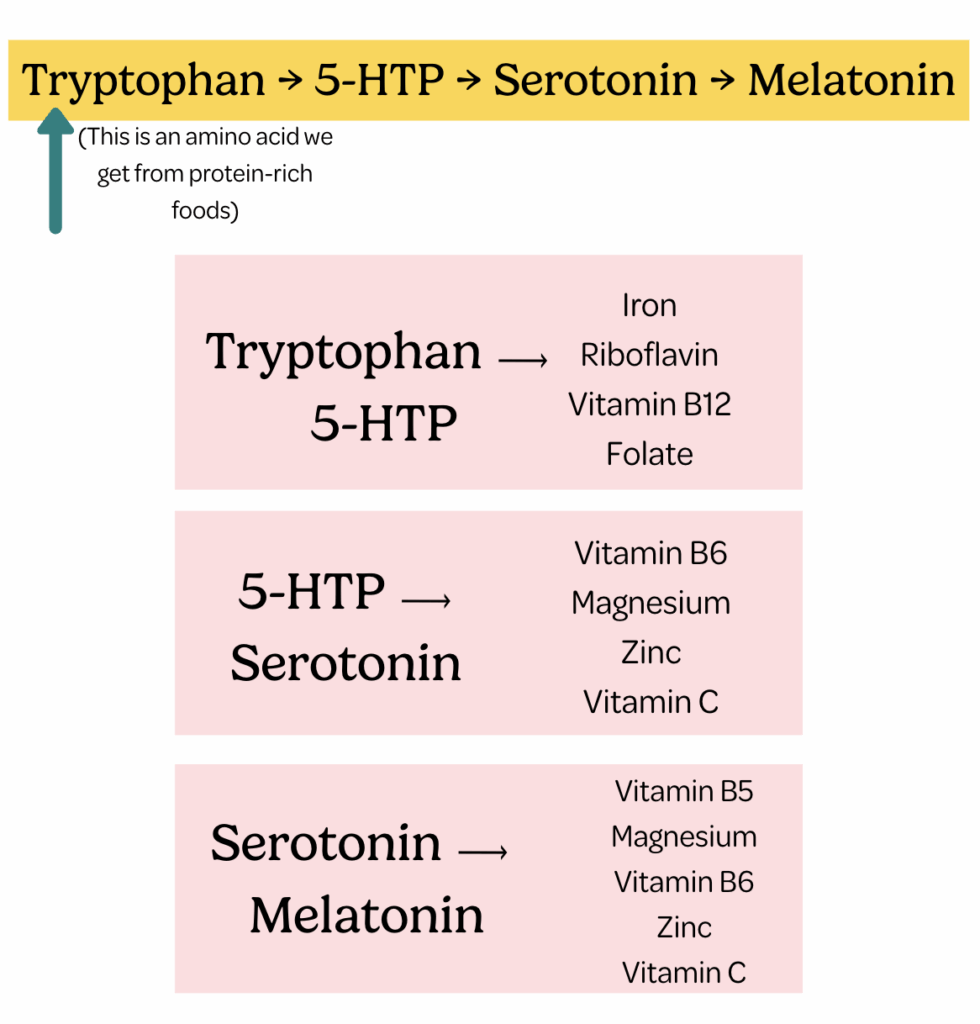
Here’s the simplified version of how protein supports mood and sleep:
Tryptophan → 5-HTP → Serotonin → Melatonin
Each arrow represents a conversion step that depends on specific micronutrients.
When you don’t have enough protein or micronutrients to support this pathway, serotonin and melatonin production slow down. You feel irritable, restless, and have a harder time falling or staying asleep.
Carbohydrates get a bad rap, but they are actually tryptophan’s best friend.
When you eat carbohydrates, your body releases insulin, which helps most amino acids move into your muscles. Tryptophan, however, stays in your bloodstream. This gives it preferential access to your brain, where it can be turned into serotonin and melatonin.
That’s why protein and carbs are better together.
Carbs also play another crucial role. They help keep your blood sugar stable, which prevents excessive cortisol release. High cortisol can interfere with an enzyme called tryptophan hydroxylase, which is needed to convert tryptophan into 5-HTP.
In other words, eating balanced meals with protein, complex carbs, fat, and fiber helps your body actually make the neurotransmitters it’s supposed to.
So no, you don’t need to cut carbs to “be healthy.” You need to pair them strategically to create biochemical balance.
Tryptophan doesn’t just help with mood and sleep. It’s also a key player in energy production.
Your body can convert tryptophan into niacin, also known as vitamin B3. Niacin is essential for creating NAD and NADP, which your mitochondria use to produce ATP, your body’s main source of energy.
When you’re under chronic stress or inflammation, your body prioritizes this niacin pathway to keep your cells powered. But that means less tryptophan is available for serotonin production.
You might feel this as constant fatigue, low mood, or that “burned out but wired” state. Supporting both pathways with adequate protein and micronutrients helps your body decide that it’s safe to make both energy and calm.
Let’s talk about how all of this connects to your thyroid, because this is where things get really interesting.
Serotonin actually helps your pituitary gland release TSH (thyroid stimulating hormone). TSH tells your thyroid to make thyroid hormones, which regulate metabolism, energy, and mood.
When thyroid function is low, serotonin levels can drop. That lowers TSH, which lowers thyroid hormones even more. You end up stuck in a vicious cycle:
Low thyroid → low serotonin → low TSH → lower thyroid → repeat.
This is one of the reasons so many women with thyroid concerns also experience low mood, anxiety, and poor sleep. It’s all connected through your body’s biochemistry.
If serotonin brings calm, dopamine brings motivation and focus.
Like serotonin, dopamine is made from amino acids — specifically tyrosine. Tyrosine also depends on nutrients like vitamin C, copper, and B vitamins for conversion.
Dopamine also influences TSH production. Too little dopamine can make you feel foggy, unmotivated, and forgetful. Too much dopamine, often from chronic stress or stimulant (like caffeine) overuse, can suppress TSH, which lowers thyroid hormone output and eventually reduces dopamine levels too.
It’s a biochemical tug-of-war that leaves you exhausted, anxious, and craving coffee or sugar for quick hits of energy.
Here’s what supporting your neurotransmitters looks like in real life:
Aim for 20 to 30 grams of protein per meal. Include sources like:
Add carbs that digest slowly and support steady blood sugar, such as:
Support neurotransmitter production with nutrient-dense foods like:
About 90% of serotonin is made in the gut, so gut health matters for mood too. Add:
Your neurotransmitters crave stability. Try to eat consistent meals throughout the day and avoid skipping meals, which can send your blood sugar and cortisol on a rollercoaster.
When I learned how deeply protein and micronutrients influenced mood, it was a total lightbulb moment. I had blamed my irritability, low motivation, and afternoon fatigue on stress for years. But once I started intentionally pairing protein and carbs and paying attention to nutrient cofactors, my brain felt quieter.
My energy evened out. My sleep improved. And my mood stabilized without needing a total lifestyle overhaul.
You don’t have to white-knuckle your way through fatigue, mood swings, or burnout. You just need to give your body the tools to make the chemistry it’s been trying to make all along.
Our clients have similar “ah-ha” moments:
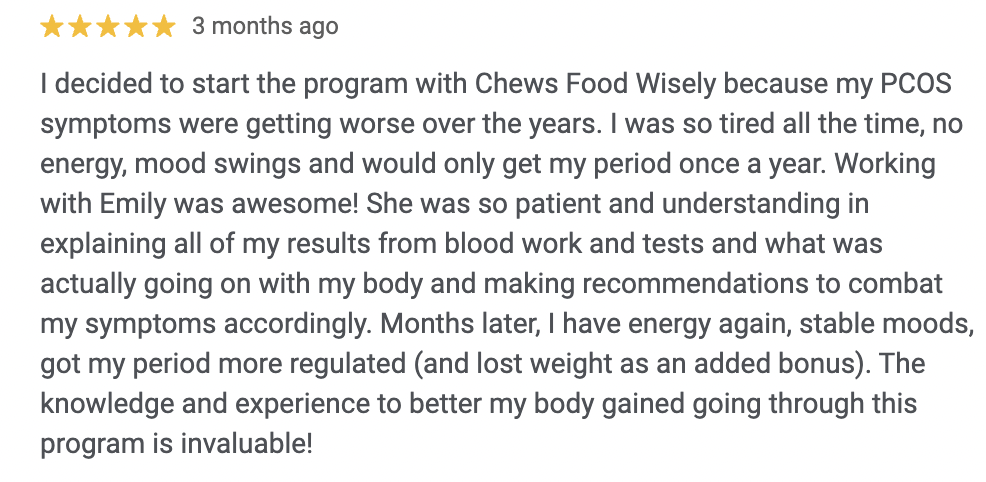
At Chews Food Wisely, we use The BRAIN Method™, a proven framework designed to help women finally understand why they feel tired, bloated, moody, or stuck, even when they’re doing everything “right.”
The BRAIN Method isn’t about restriction. It’s about restoration, that is, giving your body nourishment, not deprivation.
BRAIN stands for:
The BRAIN Method is how we personalize nutrition using functional biochemistry to help women go from surviving to thriving.
Nutrition for mood isn’t about eating less. It’s about eating smarter. It’s about recognizing that your brain and hormones are fueled by nutrients, not willpower.
When you give your body enough protein, micronutrients, and balance, you’re not just feeding your body…you’re nourishing your neurochemistry.
That’s the difference between restriction and restoration.
At Chews Food Wisely, we’ve helped hundreds of women finally feel like themselves again by addressing the root causes of fatigue, cravings, and mood changes. Our mission is simple: to help you understand your body’s language and give it what it’s been asking for all along.
💌 Ready to feel like yourself again?
Apply to work with our team at Chews Food Wisely and let’s build your BRAIN Method together.
Yes, and it surprises a lot of people. Your brain uses nutrients from the food you eat to make the chemicals that support calm, focus, motivation, and emotional stability. When you are under eating or missing key nutrients, your brain cannot keep up and your mood feels it very quickly.
Protein breaks down into amino acids that your brain uses to build neurotransmitters like serotonin, dopamine, and melatonin. Without enough protein throughout the day, your body struggles to make these feel good chemicals, which can show up as mood swings, irritability, low motivation, cravings, and restless sleep.
No. Cutting carbs usually backfires. Carbs actually help tryptophan enter the brain so you can make serotonin and melatonin. Balanced meals with protein, complex carbs, healthy fats, and fiber are much more supportive for steady mood and energy than low carb diets.
A mood plate usually includes twenty to thirty grams of protein, a serving of complex carbs, healthy fats, and colorful plants for micronutrients. Examples include salmon with roasted sweet potatoes and a big salad or eggs with oatmeal and berries. This combo gives your brain the raw materials it needs to function at its best.
Serotonin helps signal TSH, which is the hormone that tells your thyroid to do its job. Low thyroid function can lower serotonin, which lowers TSH even more. This creates a cycle that can leave you feeling tired, foggy, anxious, or low. Supporting mood often means supporting thyroid health at the same time.
Dopamine is made from the amino acid tyrosine and relies on nutrients like copper, iron, vitamin C, and several B vitamins. Dopamine is responsible for motivation, focus, pleasure, and drive. When it is low, you may feel unmotivated, overwhelmed, or stuck in that classic “I want to do things but cannot get myself to start” feeling.
Absolutely. When blood sugar dips, your brain panics and signals stress hormones to bring sugar back up quickly. This can look like irritability, anxiety, shakiness, brain fog, and sudden cravings. Eating regular meals with enough protein and carbs helps prevent these crashes and keeps your mood steady.
Yes. Your gut makes a large portion of your serotonin and communicates constantly with your brain through the gut brain axis. If your gut is inflamed or imbalanced, you may experience bloating, irregular digestion, nutrient deficiencies, and mood changes. Supporting the gut often improves both mental clarity and emotional wellbeing.
Food is the foundation. Supplements are helpful when they target real deficiencies or support specific pathways your brain relies on. Many people feel better with a combination of nourishing meals and targeted supplements that match their labs. Random supplement routines rarely make lasting change.
Common deficiencies include B vitamins, magnesium, zinc, vitamin D, iron, copper, and omega 3s. These nutrients directly influence neurotransmitter production, energy creation, hormone balance, and inflammation. When they are low, your mood will reflect it.
Yes. Skipping meals or eating too little can tank your blood sugar and stress your body. This impacts your mood, energy, focus, and ability to manage stress. Eating consistently tells your body that it is safe, which directly influences your emotional stability.
When you are stressed, your body uses more nutrients, cranks up inflammation, and messes with your hormone and blood sugar balance. This makes it harder for your brain to produce serotonin and dopamine. Supporting your stress response through food, minerals, and nervous system support can make a big difference.
Yes. Balanced meals that support steady blood sugar reduce stress hormone spikes that often feel like anxiety. Many clients notice calmer moods, easier mornings, and fewer emotional crashes within a couple weeks of eating more consistently.
Signs include low energy, irritability, cravings, trouble focusing, brain fog, anxiety, depression, poor sleep, and feeling overwhelmed by small tasks. If these are familiar, your body may not be getting the nutrients or fuel it needs to regulate your mood well.


EMAIL:
hello@chewsfoodwisely.com
VIRTUAL APPOINTMENTS ONLY
Business Mailing Address:
2525 Robinhood Street
Houston, Texas 77005
© 2026 Chews Food Wisely. All Rights Reserved. Website Designed by AVM
Disclaimers | Privacy Policy | Terms of Purchase | Terms and Conditions