If you consider yourself the “driven” type—high-achieving, productivity-focused, always scanning for what needs to be done next—you might just be what I call a Type-A-and-a-half. You’re not necessarily glued to a planner or running on caffeine and checklists, but there’s a part of you that thrives on structure, responsibility, and doing things well.
I know this, because I live it.
As someone living with Hashimoto’s and OCD, I know what it’s like to carry a constant mental load that never really shuts off. I know what it feels like to perform well under pressure, to look like I’ve got it all together on the outside—but feel completely drained, bloated, foggy, and off on the inside.
And I also know that those of us who are “really good at handling stress”? We’re often the most depleted.
Let me walk you through exactly why that is—and what it means for your thyroid health.
Type A personality traits are often associated with perfectionism, urgency, achievement-driven behavior, and a tendency to internalize stress. Research has shown that individuals with these traits are more prone to chronic stress and inflammatory conditions—and that includes autoimmune diseases like Hashimoto’s.
Hashimoto’s is an autoimmune condition where your immune system mistakenly targets your thyroid gland. It can cause hypothyroidism (underactive thyroid), leading to symptoms like fatigue, weight gain, constipation, brain fog, depression, and menstrual irregularities.
But here’s what most people don’t realize: Your personality traits can actually impact your biology.
Type A individuals often operate in a high-alert state. This activates the HPA axis (hypothalamic-pituitary-adrenal axis), resulting in elevated cortisol levels over time.
High cortisol:
Translation? You can be producing “normal” amounts of thyroid hormone, but your cells aren’t using it effectively—leaving you with all the symptoms of hypothyroidism, despite “normal” labs.
Stress doesn’t just live in your head—it shows up in your gut. Chronically activated sympathetic nervous system (fight-or-flight mode) leads to:
Over time, this can result in intestinal permeability (aka “leaky gut”), where food particles and toxins like LPS (lipopolysaccharides) pass into the bloodstream and trigger immune responses.
In people genetically susceptible to autoimmunity, this can cause the immune system to start attacking the thyroid.
Living in a state of high performance, high pressure, and mental overdrive depletes the very nutrients your thyroid depends on.
Chronic stress and poor absorption can lead to:
And let’s not forget the mental load: the women who are raising kids, running businesses, managing households—they often don’t eat enough, or eat inconsistently, which further drains the tank.
In our practice, we hear this all the time: “I’m really good at handling stress.”
And those are usually the clients who are the most depleted on labs.
Because when your inner engine is always running, your body adapts—until it can’t. The systems that were once flexible and resilient start to show cracks:
These are red flags that the body is stuck in a chronic compensatory state.
I don’t live by a rigid planner, and I’m not obsessed with checking off boxes—but I do have OCD. And my brain is a master of hyperfixating on what needs to be done, what hasn’t been done, and how to get better.
For years, I looked “fine.” My labs were mostly normal. I was eating clean, working out, showing up.
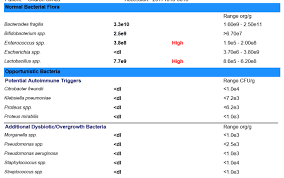
But inside? I was bloated, tired, foggy, and frustrated. And it wasn’t until I started digging into functional nutrition testing that I saw the full picture:
It wasn’t about doing more. It was about shifting how I approached my health altogether.
Inside our 1:1 programs at Chews Food Wisely, we don’t just look at your TSH and send you on your way. We:
And yes, we talk about your stress. Not to tell you to “relax more” or just do yoga. But to understand how your personality and patterns have shaped your physiology—and how to shift from depletion to restoration.
Healing Hashimoto’s (or any chronic condition) isn’t about doing a total 180 overnight. And it’s definitely not about punishing yourself with another rigid plan.
It looks like:
If you’re a high-functioning, hyper-responsible woman who has “done everything right” and still feels stuck in fatigue, bloating, weight changes, or cycle chaos—you’re not broken. But your body might be sending you a message that it’s time to do things differently.
We see you. We are you. And we want to help you find a path forward that makes sense for your life—not one that adds more to your plate.
If this hits home, trust us—we get it. Living a healthy life doesn’t mean doing a total 180. It’s about building systems and strategies that make sense for you and don’t add to your stress load.
Because your mindset matters just as much as your minerals.
Ready to find out what your body really needs? Apply to work 1:1 with our team of functional dietitians.


EMAIL:
hello@chewsfoodwisely.com
VIRTUAL APPOINTMENTS ONLY
Business Mailing Address:
2525 Robinhood Street
Houston, Texas 77005
© 2026 Chews Food Wisely. All Rights Reserved. Website Designed by AVM
Disclaimers | Privacy Policy | Terms of Purchase | Terms and Conditions