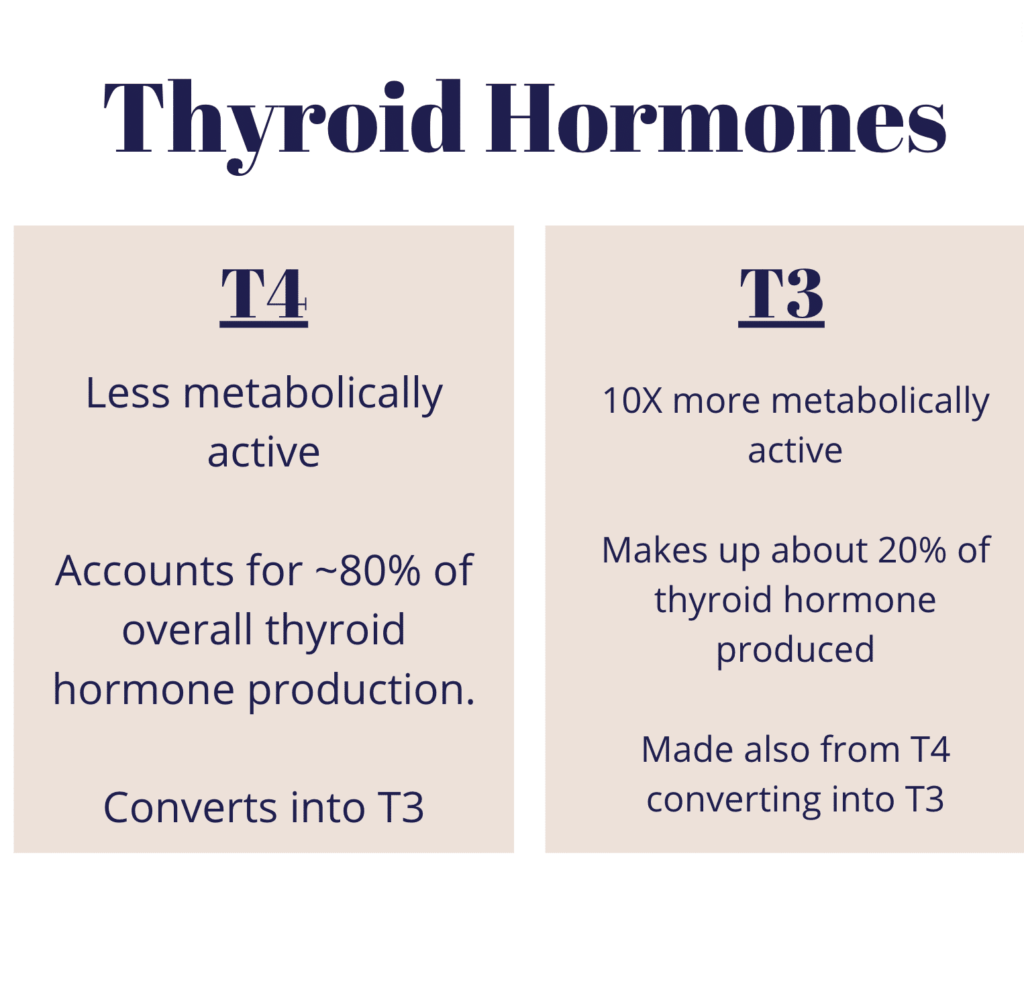
The thyroid produces two main hormones: T4 and T3.
Poor little T3 doesn’t get a lot of attention from conventional lab testing because TSH and T4 often steal the show. And, I get it, TSH and T4 are often what providers assess to determine thyroid status and adjust medication, but T3 being even marginally off can have dramatic impacts on how you’re feeling.
If you’re like many of my clients, taking more and more Synthroid didn’t really help you to feel better long term. Sure, you may have noticed a big boost in energy initially, only to be back at square one not too much later. In fact, most clients reported feeling:
anxious
frazzled
wired-but-tired while
sluggish metabolism
weird digestive issues
hair thinning
clothes not fitting
acne
feeling SO DARN TIRED all the time!
How can one be wired by tired at the same time?
One common reason: low T3 hormones!
Let’s back up a little bit though and review the difference in T4 and T3. The thyroid gland predominantly produces T4 (around 80% of production). To a lesser degree, the thyroid also produces T3 (about 20% of production). There are other thyroid hormones, but these are the two main ones we’ll focus on.
The body converts T4 to T3 in several areas of the body including, but not limited to:
liver
gut
heart
muscles
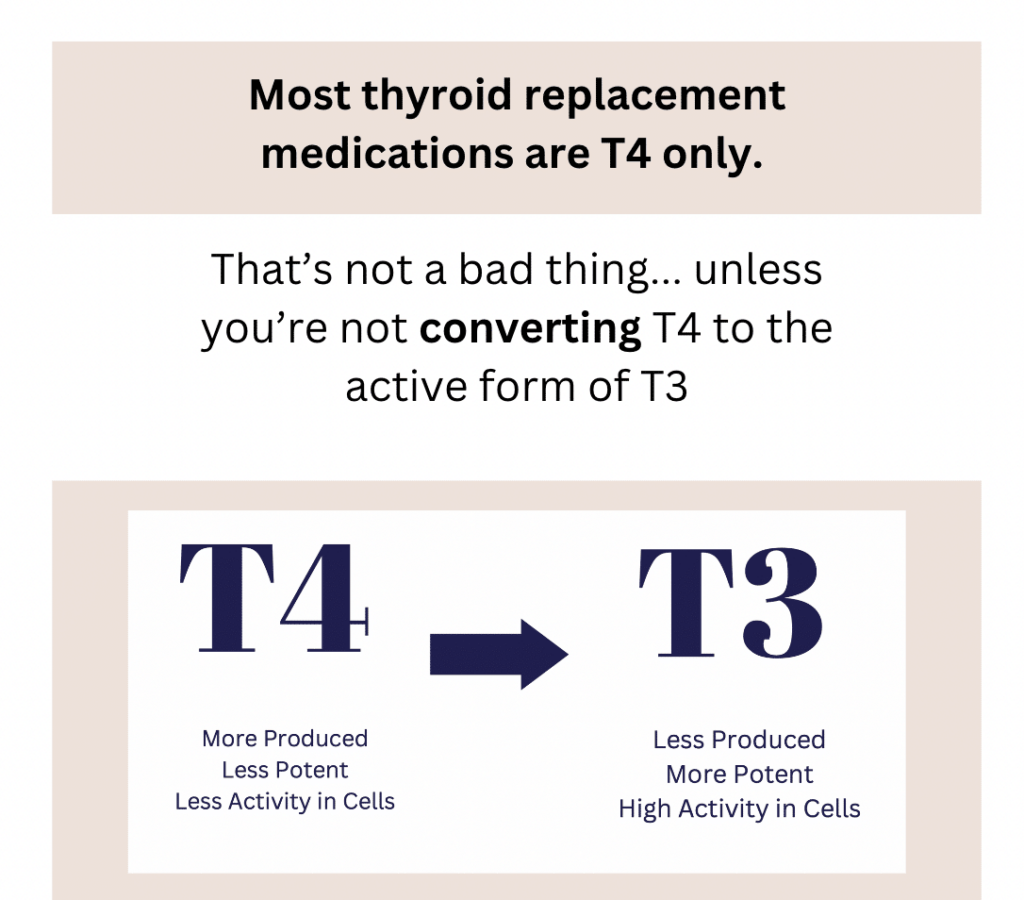
And while this conversion happens smoothly in theory, the reality is that there are several factors that can hinder the T4 to T3 conversion. This is a big problem if you’re taking a T4 medication only (which MOST thyroid replacements are T4 only– which isn’t a bad thing at all!! It just means you’ll want to assess your T3 levels too to make sure you’re converting appropriately).
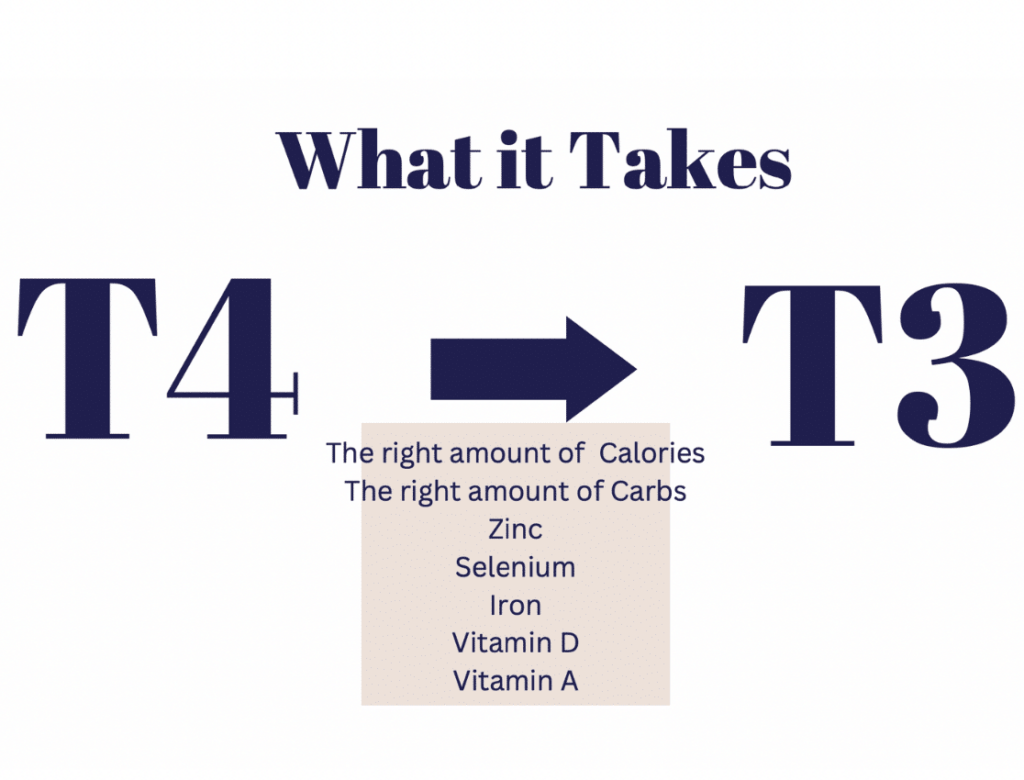
Converting T4 into T3 is a nutrient and energy demanding process. Simply put, it requires plenty of energy in the form of calories as well as several nutrient cofactors and coenzymes in the form of different vitamins and minerals. Beyond that, there can be some factors that impede this conversion including things like: stress, nutrient deficiency, poor liver health, poor gut health, prolonged fasting, inflammation, heavy metals, insulin resistance, and more.
There is a lot that influences the T4 to T3 conversion that is in our control!
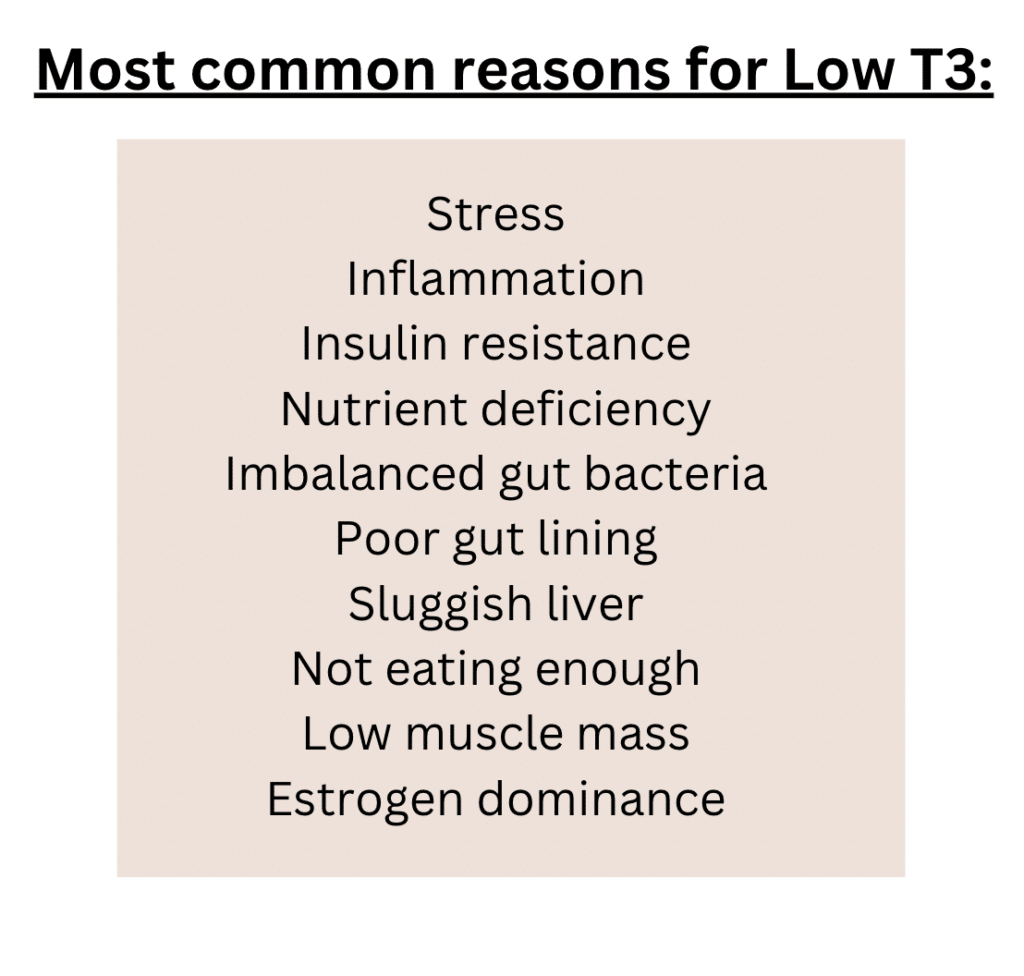
Most common influences to an impaired T4 to T3 conversion include:
Stress: High amounts of stress hormones can suppress TSH secretion from the brain. This gives the impression that your thyroid status is “fine” because you have a normal TSH, but in reality you’re still experiencing hypothyroidism because your T3 is low. Stress will also increase the conversion of T4 to Reverse T3 (inactive T3)
Blood Sugar Dysregulation:Numerous studies have shown that insuline resistance has an associated significant reduction in T4 to T3 conversion, an intracellular deficiency of T3, and an increased conversion of T4 to reverse T3, further reducing intracellular T3 levels. Elevated insulin will increase D2 activity and suppress TSH levels, further decreasing thyroid levels and making it inappropriate to use the TSH as a reliable marker for tissue thyroid levels in the presence of elevated insulin levels. PMID: 30631416
Inflammation: A lot of T4 to T3 conversion occurs in the cell membranes which can get damaged when inflamed. High levels of inflammatory cytokines can also increase demand for antioxidants like zinc and selenium that play big roles in the T4 to T3 conversion.
Nutrient deficiencies: nutrients including zinc, copper, and selenium are needed to fuel the T4 to T3 conversion. Deficiencies in these areas slow the process down as there aren’t enough cofactors to fuel the process.
Poor gut integrity: T4 to T3 conversion cane happen in the gut lining. A compromised gut lining, such as leaky gut or gut inflammation, can negatively affect the conversion. Additionally, gut bacteria can also play a role in the T4 to T3 conversion, so improperly balanced bacteria can lead to enzyme alterations in the gut that decrease conversion.
Low calorie diets: low energy intake can impair the T4 to T3 conversion for two main reasons. One, there isn’t enough energy to fuel the process. Two, a low T3 can often be a metabolic adaptation to slow the metabolism down when there is a high perceived stress load. When the body and brain feel threatened, metabolism slows down to protect you. Thanks, body… 😬
Estrogen dominance:can lead to higher amounts of thyroxine binding globulin (TBG) which takes thyroxine (T4) out of circulation and leaves a lower pool of T4 to convert into T3.
So what can you do to support your thyroid hormone conversion?
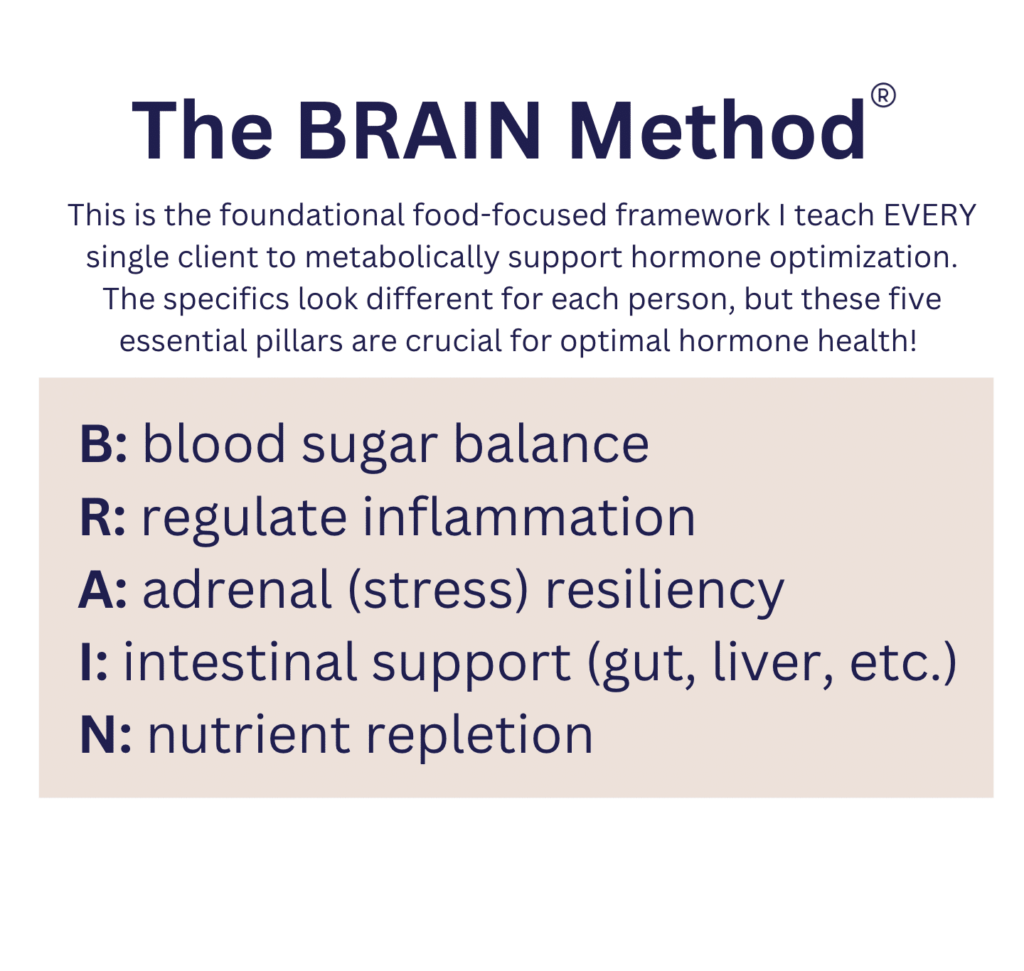
Here at CFW, we partner with clients to leverage the power of nutrition and lifestyle to support optimal hormone balance. The five main pillars that we optimize are:
blood sugar
inflammation
stress
gut health & detoxification
nutrient status
This is done through the unique method we’ve perfected over the years as a Functional Dietitians. We implement and personalize for each and every client.
I'm Nicole, Integrative & Functional Registered Dietitian Nutritionist — and a Hashimoto's patient and busy momma of three who has been in your shoes. I spent years trying to figure out why I felt so off despite doing all the "right" things, and that experience completely shaped the way I work with women today.
My whole approach is built around nourishing your body with real food you actually want to eat, not white-knuckling your way through a six-week protocol that leaves you more exhausted and more confused than when you started. Because restriction doesn't heal anything. Real, sustainable nourishment does.
I'm a college professor and educator at heart— I teach a range of classes from freshman level "Introduction to Nutrition" and graduate-level Women's Health and Nutrition courses, and that passion for making complex science click in plain English is woven into everything I do. If you leave a session without actually understanding why we're doing what we're doing, we haven't done our job.
I love going on long walks while listening to an audiobook (my FAVORITE is The Count of Monte Cristo, but I'm currently reading Lord of the Rings), being totally outnumbered with my three wild kiddos, eating yummy food, sipping a good cup of coffee, and (trying) to crochet!
Freebies For you!
Kickstart your journey without feeling overwhelmed! Check out our free resources for women living with thyroid issues, Hashimoto's, PCOS, insulin resistance, weight loss resistance, and exhaustion.
Whether you're running on fumes no matter how much you sleep, trying to make sense of a Hashimoto's or thyroid diagnosis, dealing with periods that knock you completely sideways, navigating PCOS, struggling with cholesterol or blood sugar that won't cooperate, or carrying weight that refuses to budge no matter what you try — please know you are not alone. And more importantly, there is an actual reason you feel this way. At Chews Food Wisely, we're not here to hand you a meal plan and wish you luck. We're here to look at your full picture — your labs, your symptoms, your life — and find the connections that explain why your body has been doing what it's been doing. Then we build you back up with real food, realistic strategies, and a plan that fits your actual life. Not a protocol designed for someone else's body.